How to Read a Book by Mortimer Adler: the four levels, the four questions, and the parts worth skipping
How to Read a Book says a reader should ask every book four questions and answer them without help: what is it about as a whole, what is being said in detail and how, is it true, and what of it. The rest of the book is instructions for answering them, and in the 1940 printing I used, the part called "The Rules" begins on page 61 of 188.
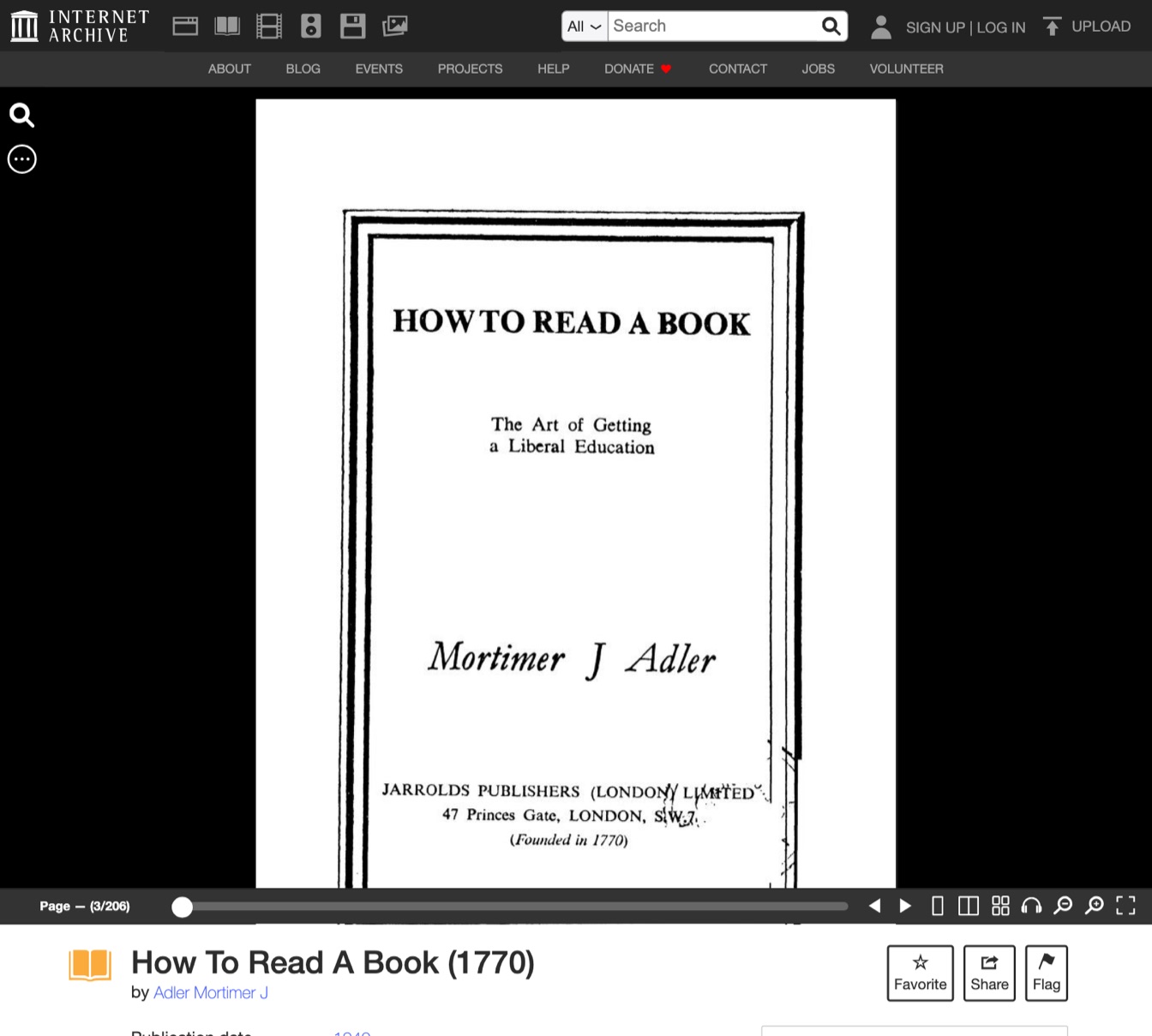
I build Understand, a voice tutor for adults, and I have no connection to the authors or the publisher. The 1940 edition is a London printing scanned on archive.org; I read its preface, the chapters on the rules and the appendix, and searched the rest. The 1972 revision is on Google Books, which previews 65 pages and returns snippets of the others. I have read neither cover to cover. Every quotation below is one I saw, with its chapter.
The four levels of reading
The levels are the 1972 edition's main idea, set out in chapter 2. The authors call them levels and not kinds because "higher ones include lower ones."
| Level | The question it asks | What the reader does | In the 1972 edition |
|---|---|---|---|
| Elementary | "What does the sentence say?" | Recognises the words, as taught in school | Chapter 3 |
| Inspectional | "What is the book about?" | Skims the book systematically in a set time, then reads it through once without stopping | Chapter 4 |
| Analytical | The four questions, in order | Outlines the book, interprets it, then judges it, by fifteen rules | Chapters 6 to 11 |
| Syntopical | "What of it?" above all | Reads many books on one subject | Chapter 20 |
Most readers skip inspectional reading. Chapter 2 describes them: "They start a book on page one and plow steadily through it, without even reading the table of contents." Its aim is "to get the most out of a book within a given time", and fifteen minutes is the authors' example. The reading time calculator gives the cost of a full reading to set against that.
Analytical reading is "the best and most complete reading that is possible given unlimited time", and chapter 2 adds that it "is hardly ever necessary" if you want only information or entertainment. Syntopical reading is for building "an analysis of the subject that may not be in any of the books."
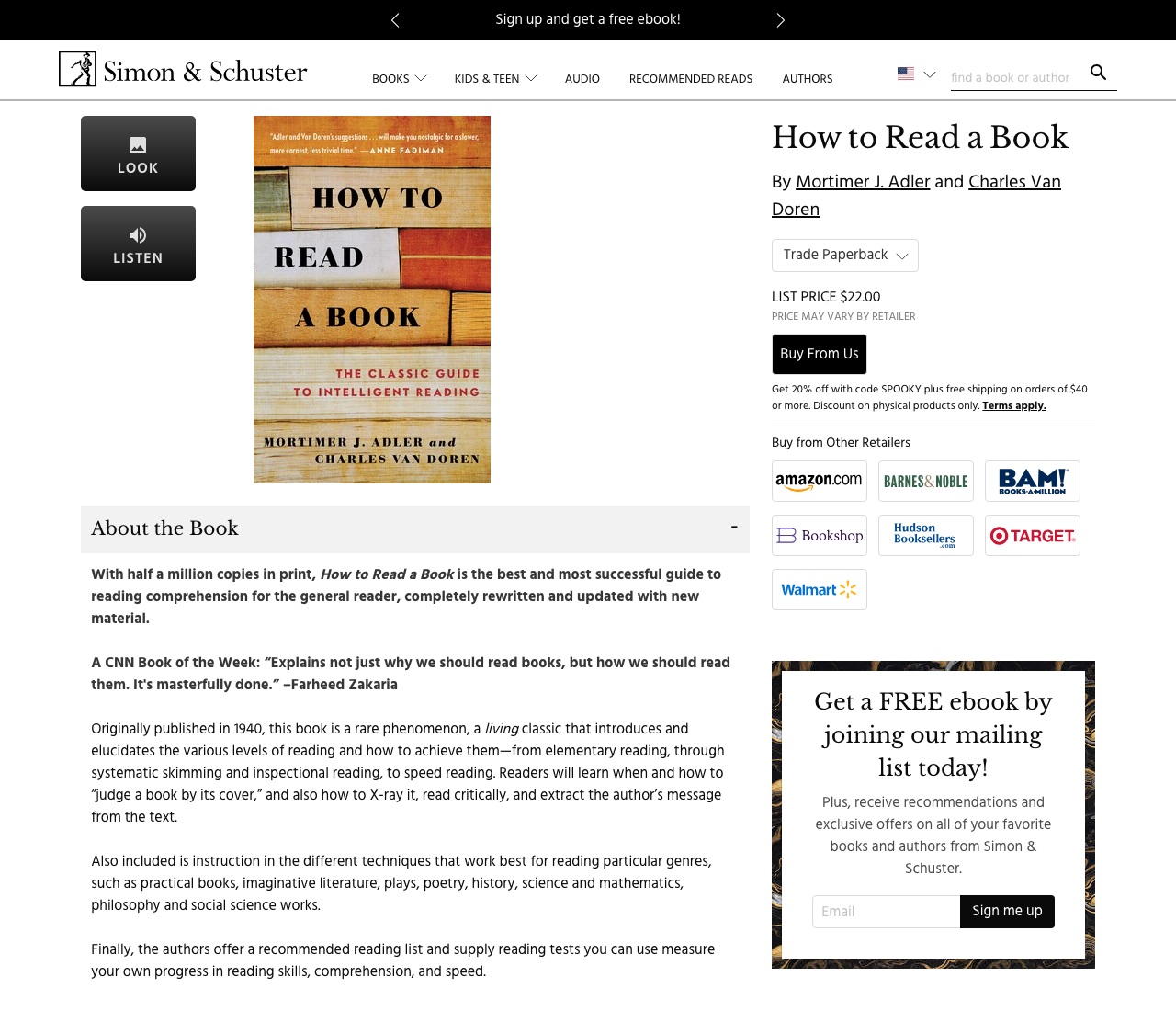
The publisher's page says the levels run "from elementary reading, through systematic skimming and inspectional reading, to speed reading." That is not the book's list. The preface calls speed reading "a national fad", and chapter 4 wants a reader to have "many different speeds, not just one speed that is faster than anything you can manage now." The blurb is a fair first exercise in the third question.
The four questions an active reader asks
Chapter 5 of the 1972 edition gives its one prescription for active reading: ask questions while you read, "questions that you yourself must try to answer in the course of reading."
- "What is the book about as a whole?"
- "What is being said in detail, and how?"
- "Is the book true, in whole or part?"
- "What of it?"
The third has a condition: "You cannot answer this question until you have answered the first two." Of the reader who skips all four, the chapter says that he "asks no questions" and "gets no answers."
The rules of analytical reading
Chapters 6 to 11 turn the first three questions into fifteen rules, listed on two pages of chapter 11.
The first stage finds what the book is about. Classify it, "State what the whole book is about with the utmost brevity", list its parts in order, and "Define the problem or problems the author has tried to solve."
The second stage interprets. "Come to terms with the author" by finding the important words and how the author uses them. Find the leading propositions, then the arguments. Decide which problems the author solved.
The third stage is criticism, and it opens with manners. Rule 9: "Do not say you agree, disagree, or suspend judgment, until you can say 'I understand.'" Then come the permitted grounds for disagreeing. Show that the author is uninformed, misinformed or illogical, or that the analysis is incomplete. The note under the list is strict: "Failing in all of these, you must agree, at least in part". Disliking the author is not on the list.
The authors know what they are asking. Chapter 11: "Few people have ever read any book in this ideal manner, and those who have, probably read very few books this way."
Reading a hard book for the first time
The advice is in chapter 4, and it runs against what school taught: "In tackling a difficult book for the first time, read it through without ever stopping to look up or ponder the things you do not understand right away."
What you get from a full first reading, "even if it is only fifty percent or less", helps on the second. A dictionary and a commentary come later. Used early, "they only impede our reading."
Chapter 5 says why a hard book is the right book: "Good books are over your head; they would not be good for you if they were not." The same chapter opens with rules for falling asleep. Get into bed, arrange a light bad enough "to cause a slight eyestrain", and choose a book "either terribly difficult or terribly boring".
The 1940 edition and the 1972 revision
They are close to being two books. The 1972 preface: "Of the four parts, only Part Two, expounding the rules of Analytical Reading, closely parallels the content of the original, and even that has been largely recast."
Checked against both texts:
- The 1940 edition is subtitled "The Art of Getting a Liberal Education" and has 17 chapters in three parts. The 1972 edition has 21 chapters in four parts and two appendices.
- The four levels are new in 1972. The words "inspectional", "syntopical" and "skim" appear nowhere in the 1940 text I searched. Its chapter 7 has three readings: "structural or analytic", "interpretative or synthetic", and "critical or evaluative".
- The four questions are in the 1940 edition, but late, in chapter 15, and the first is worded "What in general is being said?" In 1972 they moved to chapter 5.
- The rules barely changed. "Show wherein the author is uninformed" reads the same in both.
- The 1972 edition adds seven chapters on particular kinds of books.
- The 1940 reading list numbers 113 authors and adds 18 contemporaries under letters. The 1972 list numbers 137 and ends with Solzhenitsyn.
The 1972 preface records that a parody followed the first edition, called How to Read Two Books. Adler notes that the revision covers the parody's subject too.
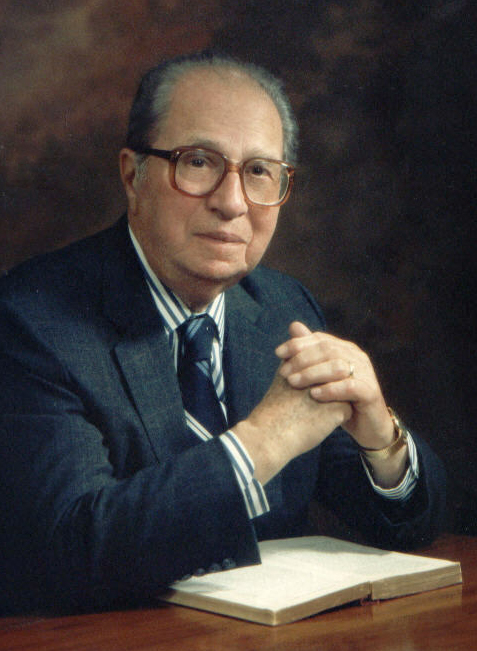
The co-author of the revision is Charles Van Doren. His family is in the first edition too. In chapter 1 of the 1940 text Adler confesses that as a young teacher at Columbia he prepared for class from commentaries, and that his colleague, the poet Mark Van Doren, was "certainly a better reader." Charles was Mark's son. His New York Times obituary, by Robert D. McFadden (10 April 2019), reports that he told congressional investigators in 1959 that his appearances on the quiz show Twenty-One had been rigged, and that he wrote his own account for The New Yorker in 2008.
Buy the 1972 edition for the method. Read the first chapter of the 1940 edition for the voice.
The parts most readers can skip
Chapter 3 of the 1972 edition is about how children learn to read. Appendix B admits that this level "receives relatively short shrift" in the book.
Appendix B is itself 58 pages of exercises and tests, from page 363 to the index at 421. One asks you to answer the four questions about How to Read a Book.
Chapter 12 has sections titled "How to Use a Dictionary" and "How to Use an Encyclopedia". I am going by the titles.
Fair objections
It is long and it repeats itself. The rules of 1940 fit in one table, and the scan's text runs to about 95,000 words. The phrase "great books" appears in it 104 times. In chapter 16 Adler writes "I have said this before", and he had.
The book has an interest in its own reading list. Britannica's biography says Adler worked with Robert Hutchins on editing the 54-volume Great Books of the Western World (1952) and "conceived and directed the preparation of its two-volume index of great ideas, the Syntopicon." Chapter 20 of the 1972 edition has a section called "The Syntopicon and How to Use It", and the reading list marks with an asterisk the authors who are in the set. The highest level of reading comes with a recommended tool, and the first author made it.
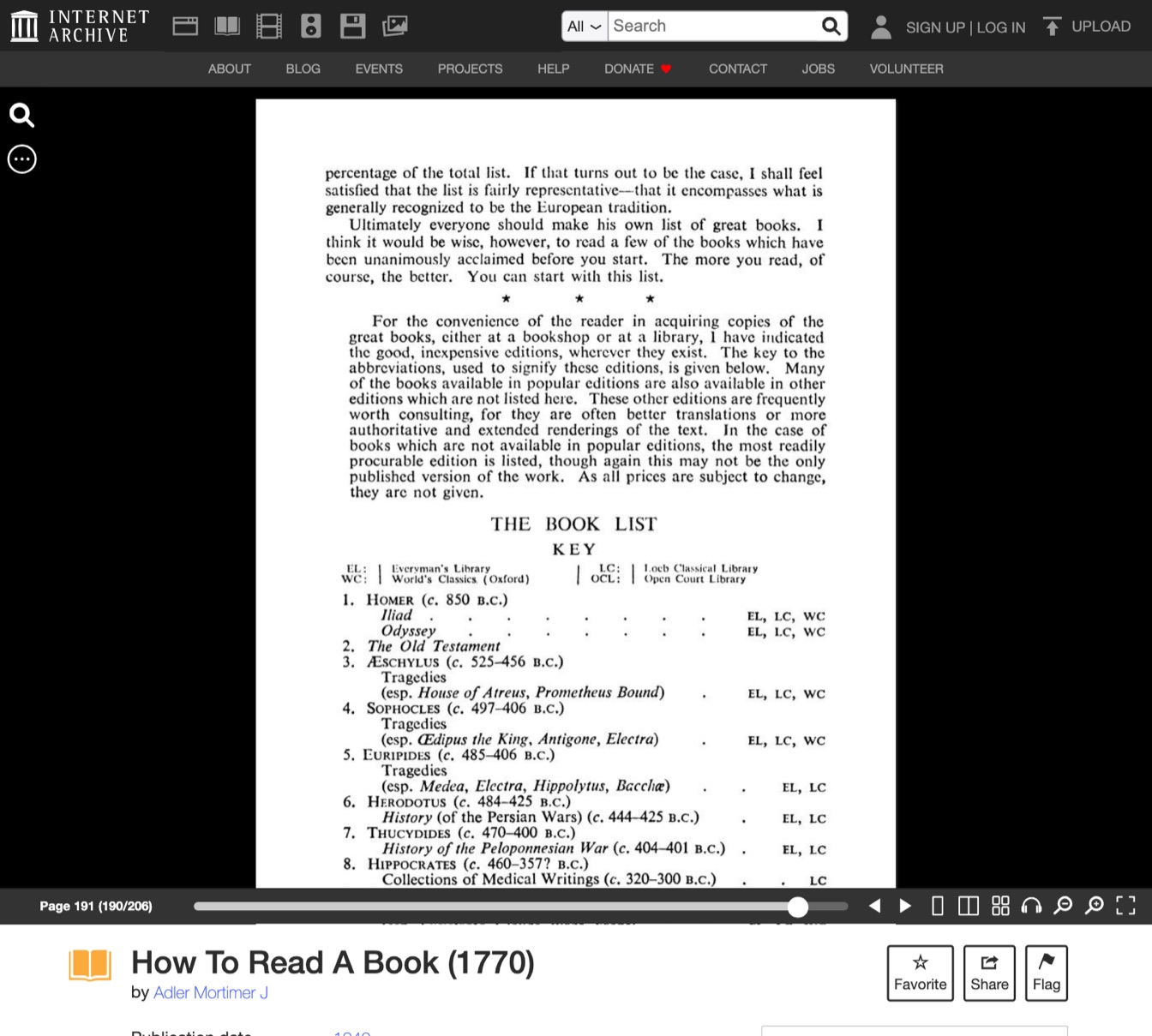
The list is Western, and the authors say so. Appendix A of the 1972 edition has "no Chinese, Japanese, or Indian works", and gives as one reason that "we are not particularly knowledgeable outside of the Western literary tradition".
Fiction gets little. Chapter 15 of the 1940 edition opens: "This is only half a book on reading". The 1972 edition gives imaginative literature two chapters and says in chapter 13 that the fifteen rules "do not apply to the reading of fiction and poetry."
On science the book is dated twice over. Chapter 17 of the 1972 edition says current science is "written by experts for experts", so its advice is for the classics and for popularisations. And Adler's account of science is the one Karl Popper argued against. The 1940 edition, chapter 14: "Science, as you know, is primarily inductive." The 1972 chapter keeps the claim that the "inductive argument is characteristic of science."
The four questions on one chapter of The Beginning of Infinity
The chapter is the first of David Deutsch's book, "The Reach of Explanations". My guide to the book leans on it, its opening is online, and it is about induction.
What is the chapter about as a whole? Scientific knowledge does not come from observation. It comes from guessed explanations that criticism and experiment then cut down, and the good ones are hard to vary. The parts, in order: we know what stars are without visiting one; empiricism says we derive that from the senses, by induction; induction fails; testability is not enough either; being hard to vary is the difference.
What is being said in detail, and how? Terms first. An explanation, for Deutsch, is an assertion "about what is out there and how it behaves." The leading proposition: "scientific theories are not 'derived' from anything." One argument is a logical gap: "no amount of deduction applied to statements describing a set of experiences can reach a conclusion about anything other than those experiences." Another is by counterexample. Sunrise, seen from orbit, "may happen every ninety minutes, or not at all", and that was known before anyone went.
Is it true? Rule 9 comes first, and the two answers above are my claim to say "I understand". Then Adler's grounds. I cannot show Deutsch uninformed or misinformed here, and I find no step that fails to follow. Incomplete, yes: the chapter gives no way to measure how hard an explanation is to vary. By Adler's note I must agree in part. Agreeing in part means disagreeing with Adler, who wrote that science is primarily inductive. His rules, applied to a chapter he never saw, find their author misinformed. I count that in their favour.
What of it? If theories are guesses, so is a reading. My answer to the first question is a conjecture about what Deutsch meant, and it would have felt as correct had it been wrong.
Adler does not pretend the method is quick. In chapter 6 of the 1940 edition he writes that he does not read "more than ten books a year" for understanding.
A pencil, a tutor, and Adler's argument for working alone
Active reading, in this book, is asking the book questions. Chapter 5 of the 1972 edition recommends a pencil: "The pencil then becomes the sign of your alertness while you read." The margin is where the answers go, because "Reading a book should be a conversation between you and the author."
A pencil is one way to hold that conversation. A tutor you can interrupt is another. I build one, so here is the book's argument against me, from chapter 1:
If you ask a living teacher a question, he will probably answer you. If you are puzzled by what he says, you can save yourself the trouble of thinking by asking him what he means. If, however, you ask a book a question, you must answer it yourself.
That is right. If something else answers the first question for you, you have a summary and have not read the book. A summary is the correct tool for deciding whether a book deserves an analytical reading, and the comparison of Blinkist, Headway and Shortform covers those. The evidence that producing an answer beats receiving one is in the post on whether audiobooks count as reading, and how to remember what you read takes it further.
Adler qualifies the point in the next paragraph. Asking saves you work only "if the question is simply one of fact." For an explanation, "you have to understand it or nothing has been explained to you." And chapter 4 of the 1940 edition concedes that "no textbook can ever be as helpful, in as many ways, as a good living guide."
So ask someone the facts. Answer the four questions yourself, and then let someone criticise the answers.
An order to read it in
For the 1972 edition:
- The contents and the preface, which is Adler's own first step.
- Chapters 2, 4 and 5, about 35 pages: the levels, the rule for hard books, the four questions and the pencil.
- The list of rules near the end of chapter 11, then chapters 6 to 11, which argue for each rule.
- From Part Three, only the kinds of book you read.
- Chapter 20, when you next have three books on one subject.
Then take a hard book and do one chapter with a pencil. The words per minute calculator gives your ordinary speed. Expect a fraction of it.
Understand
Understand is a voice chat with an AI tutor that you can interrupt. It reads an article or a PDF aloud word for word and stops when you ask a question. It answers directly. When it has explained an idea that is new to you, it asks one question that takes the idea to answer, and it builds on what you say. It draws on a board while it talks, talks through the links and PDFs you bookmarked, and keeps a record of the ideas you have shown you understand, which you can read and correct.
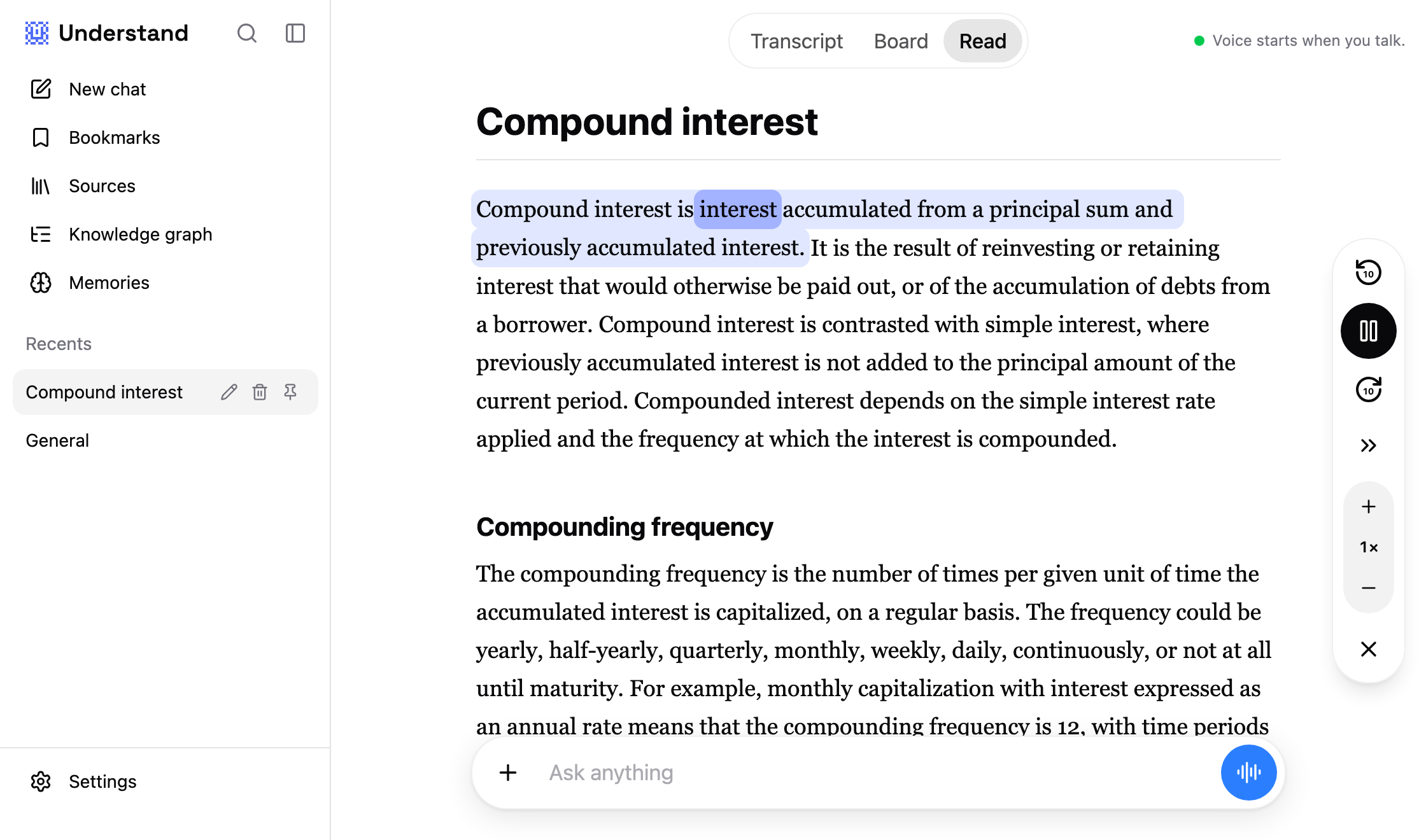
For Adler's method that makes it useful for the facts and for the criticism, and a temptation in between. It will tell you what a chapter is about if you ask, and by Adler's account you should write your own sentence first. It does not come with books; it reads a PDF with real text in it that you supply. It has no courses, no problem sets and no spaced repetition, there is no Android app, and no trial has evaluated it. It is for adults, and it is free for now.